Showing posts with label History. Show all posts

Friday, August 2, 2024

Kyan Chōtoku on training

The following is from "What to know about karate training and what to know about fighting," by Kayan Chōtoku. The translation from Japanese is by Patrick and Yuriko McCarthy, in McCarthy sensei's excellent book: Kensei Kayan Chōtoku: The Man and his Art.  

NB:  Kayan Chōtoku was a teacher of O'sensei Chitose.


Mental and spiritual discipline is vital to developing one's fundamental disposition. If it is neglected and training only focuses on physical technique (the body, hands, and feet), the effort is worthless.  This fundamental truth must be understood in order that the practice of technique develops the mind and body.  Simultaneously, one can behave, be calm, alert, brave, Etc.

  1. The aim of martial arts is to prevent violence, foster humility, and learn self-defense. This is why martial artists should behave, be modest, and loyal.
  2. The martial arts cultivate the ability to react at just the right moment using the body and mind in unison. Those who misuse their skill, or are arrogant, poorly influence their community.  Such behavior is not appreciated by anyone and only harms one's own character. 
    There was a wise old saying worth remembering: "A clenched fist should be like a hidden treasure up one's sleeve; it remains a secret until someone comes looking for it."
  3. The purpose of karate is to condition the body, cultivate the mind, and nurture the spirit.
  4. Effective posturing is made possible by sinking one's "qi/ki" into the "daniten/tanden," being careful that it does not rise up your body. However,it is important never to be overly rooted in one's stance.
  5. Kata should be practiced with the same resolve as if facing an opponent.
  6. Footwork, body movement, and impacting are all actions which should always be deployed quickly. However, remember that functionally effective footwork and body movement requires one to stay on their toes (balls of the feet).
  7. Understanding the application of  kata establishes clarity between the upper, middle, and lower target zones, otherwise one's effort is in vain.
  8. Makiwara practice is essential in order to develop powerful tools of impact. Yet, powerful techniques are useless unless they are supported by rapid hand and footwork. Therefore, power and speed are like the wheels of a wagon; one cannot function efficiently without the other.
  9. One's body, perception, and spirit must be constantly trained.

Thursday, July 25, 2024

Humility and making progress as a martial artist

"To all those whose progress remains hampered by ego-related distractions let humility, the spiritual cornerstone upon which the fighting traditions rest, serve to remind you to place virtue ahead of vice, values of head of vanity, and principles ahead of personalities."


             - Bushi Matsumura Chikudoun Pechin Sokon, maternal grandfather of  O'sensei Tsuyoshi Chitose.


Saturday, July 20, 2024

Friday, July 12, 2024

Sensei: Masters of Okinawan Karate

This is a playlist of all the "sensei" videos produced by the YouTube channel Okinawan Spirit.  I have only viewed the first dozen or so, but the productions are all good and the insight is valuable.


Thursday, July 11, 2024

Motobu on Matsumura: Learning to Think


"Having studied under Matsumura, I remember what a brilliant technician he was. I learned much watching Sensei teach his students how to think about what they were studying in order to develop and improve its application. Karate in the Ryukyus was customarily taught like this; however, those who were unable to learn to think remained stiff and inflexible"

Friday, October 8, 2021

Wabi Sabi

The concept of wabi-sabi highlights the importance of acceptance in Japanese culture, a society forced to contend with devastating natural disasters on a semi-regular basis. Rather than casting nature solely as a dangerous and destructive force, it helps frame it as a source of beauty, to be appreciated on the smallest of levels.

---


Japan’s unusual way to view the world, from BBC Travel.
The appreciation of transient beauty is at the heart of some of Japan’s most simple pleasures, such as the annual celebration of cherry blossoms (Credit: Alex Ramsay/Alamy)
Wabi-sabi offers a refuge from the modern world's obsession with perfection, and accepts imperfections as all the more meaningful – and, in their own way, beautiful.

Withdrawing my hands reluctantly from the slowly spinning bowl, I watched its uneven sides slowly come to a stop, wishing I could straighten them out just a little more. I was in the ancient pottery town of Hagi in rural Yamaguchi, Japan, and while I trusted the potter who convinced me to let it be, I can’t say I understood his motives.

Smiling, he announced, “it has wabi-sabi” – and whisked the bowl away for firing. I sat, contemplating the lack of symmetry and wondering what on Earth he meant.

As it turns out, failing to understand this phrase is not unusual. A key part of the Japanese Aesthetic – the ancient ideals that still govern the norms on taste and beauty in Japan – wabi-sabi is not only untranslatable, but also considered undefinable in Japanese culture. Often muttered in moments of profound appreciation, and almost always followed by the word muri! (impossible!) when asked to expand, the phrase offers an unusual way to view the world.

Wabi-sabi is a key part of the Japanese Aesthetic (Credit: Nathaniel Noir/Alamy)

Wabi-sabi is a key part of the Japanese Aesthetic (Credit: Nathaniel Noir/Alamy)


Originating in Taoism during China’s Song dynasty (960-1279) before being passed onto Zen Buddhism, wabi-sabi was originally seen as an austere, restrained form of appreciation. Today it encapsulates a more relaxed acceptance of transience, nature and melancholy, favouring the imperfect and incomplete in everything, from architecture to pottery to flower arranging.

Wabi, which roughly means ‘the elegant beauty of humble simplicity’, and sabi, which means ‘the passing of time and subsequent deterioration’, were combined to form a sense unique to Japan and pivotal to Japanese culture. But just as Buddhist monks believed that words were the enemy of understanding, this description can only scratch the surface of the topic.

Prof Tanehisa Otabe, professor at Tokyo University’s Institute of Aesthetics, suggests that the ancient art of wabi-cha, a style of tea ceremony established by tea masters Murata Juko and Sen no Rikyu from the late 15th to 16th Centuries forms a good introduction to wabi-sabi. By choosing common Japanese pottery over the popular (and technically perfect) imported Chinese examples, the men challenged the rules of beauty. Without bright colours and ornate designs to rely on as signifiers of accepted beauty, guests were encouraged to study subtle colours and textures that would previously have been overlooked.

Wabi-sabi leaves something unfinished or incomplete for the play of imagination

As to why they sought imperfect, rustic pieces, Prof Otabe explained that “wabi-sabi leaves something unfinished or incomplete for the play of imagination”. This opportunity to actively engage with something considered to be wabi-sabi achieves three things: an awareness of the natural forces involved in the creation of the piece; an acceptance of the power of nature; and an abandonment of dualism – the belief that we are separate from our surroundings.

Combined, these experiences allow the viewer to see themselves as part of the natural world, no longer separated by societal constructs and instead at the mercy of natural timelines. Rather than seeing dents or uneven shapes as mistakes, they are viewed as a creation of nature – much as moss would grow on an uneven wall or a tree would curve in the wind.

“The aesthetics of wabi-sabi opened our eyes to everyday life and gave us a method of handling what is common in an uncommon, aesthetic way,” Prof Otabe said, highlighting the importance of acceptance in Japanese culture, a society forced to contend with devastating natural disasters on a semi-regular basis. Rather than casting nature solely as a dangerous and destructive force, it helps frame it as a source of beauty, to be appreciated on the smallest of levels. It becomes a provider of colours, designs and patterns, a source of inspiration, and a force to work alongside, rather than against.

Originating in Taoism before being passed onto Zen Buddhism, wabi-sabi encapsulates a more relaxed acceptance of transience, nature and melancholy (Credit: Lily Crossley-Baxter)

Originating in Taoism before being passed onto Zen Buddhism, wabi-sabi encapsulates a more relaxed acceptance of transience, nature and melancholy (Credit: Lily Crossley-Baxter)

It is the inevitable mortality embound in nature, however, that is key to a true understanding of wabi-sabi. As author Andrew Juniper notes in his book Wabi Sabi: The Japanese Art of Impermanence, “It… uses the uncompromising touch of mortality to focus the mind on the exquisite transient beauty to be found in all things impermanent”. Alone, natural patterns are merely pretty, but in understanding their context as transient items that highlight our own awareness of impermanence and death, they become profound.

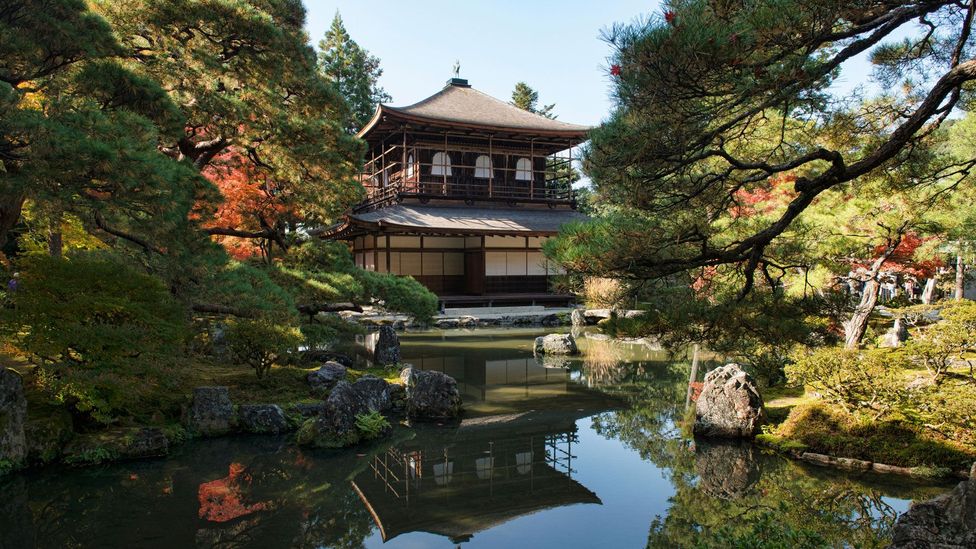
This idea brought to mind a story a Japanese colleague told me when we discussed wabi-sabi. Visiting Kyoto as a teenager, she had hurried through the grounds of Ginkakuji, a wooden Zen temple with quiet gardens, eager to see the more famous Kinkakuji, an ornate temple covered in gold leaf and perched above a reflective pond. Bright, stunning and glamorous, it lived up to her expectations, a far more impressive beauty than its traditional sister temple.

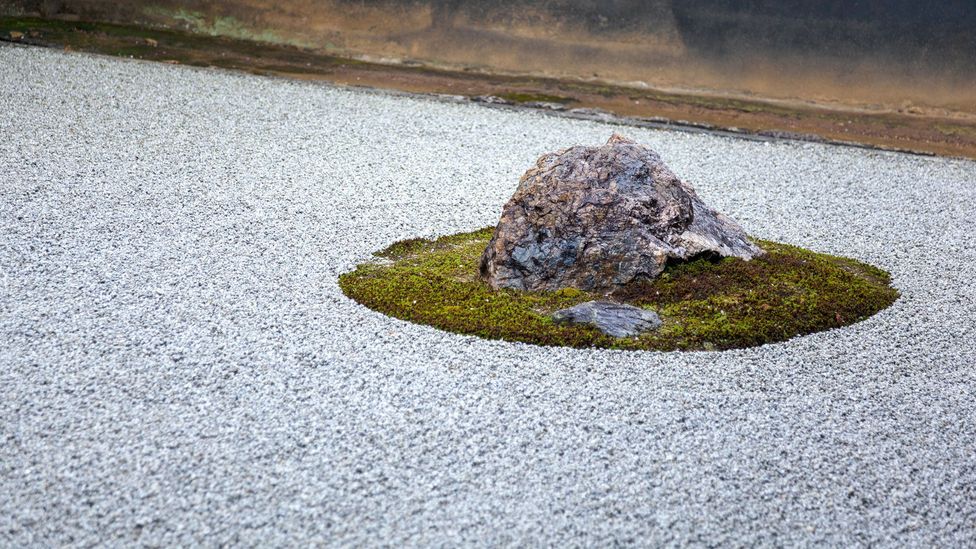
A few decades later, however, she returned to find the gold garish and, while it was certainly eye-catching, there was little beyond the immediate gratification of the gold leaf. Ginkakuji, however, offered a new fascination: the aged wood held countless hues and patterns, while the Zen moss and dry sand gardens offered a frame for nature’s many shapes. Unable to appreciate these things as a child, she had grown to see the ravages of time as a deeper source of beauty, far greater than a two-dimensional flash of gold.

Rather than seeing dents or uneven shapes as mistakes, in Japan they are viewed as a creation of nature (Credit: Christian Baumert/Alamy)

Rather than seeing dents or uneven shapes as mistakes, in Japan they are viewed as a creation of nature (Credit: Christian Baumert/Alamy)

Intrigued by the personal element of this appreciation, I contacted artist Kazunori Hamana, whose unique pieces are often considered to have an element of wabi-sabi. As we walked through the grounds of his tumbledown farmhouse in the rural idyll of Izumi in Chiba prefecture, he agreed with the need for age.

“You have different feelings when you’re young – everything new is good, but you start to see history develop like a story. After you’ve grown up, you see so many stories, from your family to nature: everything growing and dying and you understand the concept more than you did as a child.”

This appreciation for the marks of time is a key feature in Hamana’s works, which he chooses to display in derelict Japanese farmhouses. Explaining that the wooden doorframes have been blackened by years of smoke from the irori (an indoor hearth) and pointing out how the mud walls have started crumbling, he says he feels the history of the houses lend a fitting backdrop to his pieces, avoiding the cold duality of impersonal white gallery spaces.

Though not as ornate as its sister temple, Kinkakuji, the Ginkakuji temple in Kyoto exhibits a deeper source of beauty (Credit: dave stamboulis/Alamy)

Though not as ornate as its sister temple, Kinkakuji, the Ginkakuji temple in Kyoto exhibits a deeper source of beauty (Credit: dave stamboulis/Alamy)

Creating sculptures with natural clay from Shiga, an area with a reputation for high-quality clay and a long history of pottery making, Hamana embraces the important wabi-sabi concept of mutual creation between man and nature.

“I design a little at first, but clay is a natural thing, so it changes. I don’t want to fight with nature so I follow the shape, I accept it,” he said.

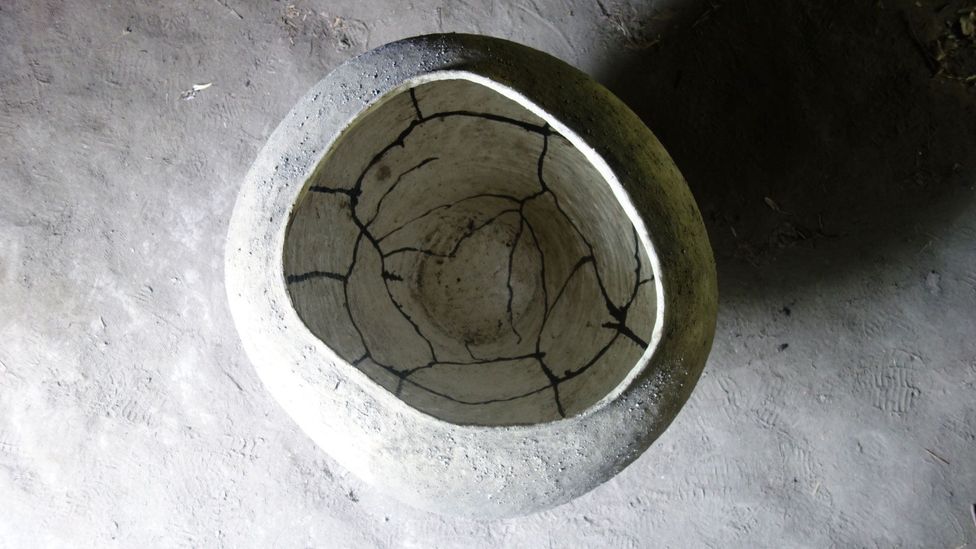
Not only does he allow nature to aid in the shaping of his pieces, but in their later appearance too. In an overgrown bamboo forest in the farmhouse grounds, he showed me the pieces he’d chosen to leave outside, buried in the undergrowth for years at a time. There they’ve developed unique patterns from extreme temperatures and surrounding plant life, as well as being occasionally broken. Studying them closely, I found that this simply added to the beauty of each piece, with the cracks offering another opportunity to add to the story.

Kazunori Hamana’s clay artwork is often considered to have an element of wabi-sabi (Credit: Lily Crossley-Baxter)

Kazunori Hamana’s clay artwork is often considered to have an element of wabi-sabi (Credit: Lily Crossley-Baxter)

Often associated with wabi-sabi is the art of kintsugi – a method of repairing broken pottery using gold or lacquer. The process highlights, rather than conceals, the cracks, allowing them to become a part of the piece, too. When his daughter accidentally broke some of his work, Hamana said, laughing, he decided to leave the pieces outside for a few years, allowing them to be coloured and shaped by nature. When it was repaired by a local kintsugi specialist, the different colours created a contrast so subtle, so uneven, that could never have been intentionally created. Embracing the effects of nature and allowing family history to be visible in a piece creates a unique value for something which would, in many cultures, simply be discarded as worthless.

Prioritising flawlessness and infallibility, the ideal of perfection creates not only unachievable standards, but misguided ones

In fact, the term ‘perfect’, which stems from the Latin perfectus, meaning complete, has been placed on an undeserved pedestal in many cultures, especially the West. Prioritising flawlessness and infallibility, the ideal of perfection creates not only unachievable standards, but misguided ones. In Taoism, since no further growth or development can take place, perfection is considered equivalent to death. While we strive to create perfect things and then struggle to preserve them, we deny their very purpose and subsequently lose the joys of change and growth.

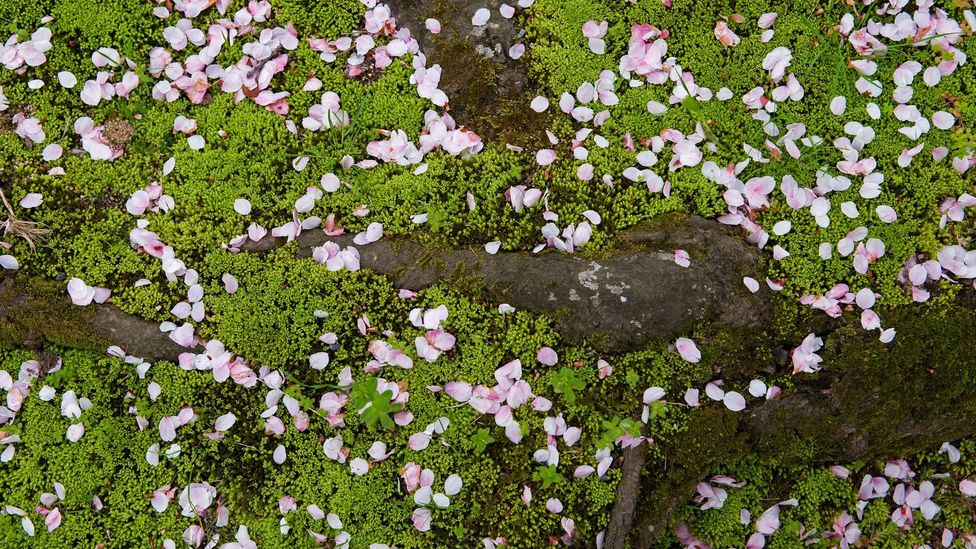
Although seemingly abstract, this appreciation of transient beauty can be found at the heart of some of Japan’s most simple pleasures. Hanami, the annual celebration of cherry blossoms, involves parties and picnics, boat rides and festivals, all beneath the often already-falling petals, considered as beautiful in their haphazard patterns on the floor as they are on the branches. The pure acceptance of a fleeting beauty that would garner no more than a few photos in the West is something of an inspiration. While the appreciation may be tinged with melancholy, its only lesson is to enjoy the moments as they come, without expectations.

The appreciation of transient beauty is at the heart of some of Japan’s most simple pleasures, such as the annual celebration of cherry blossoms (Credit: Alex Ramsay/Alamy)

The appreciation of transient beauty is at the heart of some of Japan’s most simple pleasures, such as the annual celebration of cherry blossoms (Credit: Alex Ramsay/Alamy)

The dents and scratches we bear are all reminders of experience, and to erase them would be to ignore the complexities of life. By retaining the imperfect, repairing the broken and learning to find beauty in flaws – rather than in spite of them – Japan’s ability to cope with the natural disasters it so often faces is strengthened. When my bowl from Hagi arrived in the post months later, its uneven edges were no longer a defect, but instead a welcome reminder that life is not perfect, and nor should I try to make it so.

Friday, October 23, 2020

Monday, October 19, 2020

What is Chito Ryu all about?

The following is excerpted from the "Founders Forum" pages at chito-ryu.com:

         WHAT IS CHITO-RYU ALL ABOUT?

  1. IT IS AN ART OF SELF PROTECTION WHERE THE STUDENT'S SELF PERFECTION IS OF PRIMARY IMPORTANCE.

  2. IT IS ABOUT A STYLE OF SELF DEFENSE WHERE SELF DISCIPLINE IS OF PRIMARY IMPORTANCE.

  3. IT IS ABOUT HEALTH AND LIVING A PROPER AND FULL LIFE, SO WE CAN BENEFIT ALL MANKIND.

  4. IT IS ABOUT RESPONSIBILITY, AND BEING IN CHARGE OF OUR LIVES. IT IS ABOUT NOT BLAMING OTHERS FOR OUR FAILURES.

  5. IT IS A SEEKING OF THE TRUTH, BOTH WITHIN AND WITHOUT OUR BEING.

  6. IT IS SEEKING OF A ONENESS WITH ALL CREATION, A UNIVERSAL ONENESS.

  7. IT IS A KNOWLEDGE THAT THERE IS VIRTUE IN BEING WHO YOU ARE, AND NOT WHAT YOU WOULD LIKE TO BE.

  8. IT IS AN ACKNOWLEDGEMENT THAT MONEY CAN NEVER BRING HAPPINESS, OR ENLIGHTENMENT.

  9. IT IS AN UNDERSTANDING THAT IF WE TAKE CARE OF THE SMALL THINGS IN LIFE, THE BIG THINGS WILL MOST LIKELY TAKE CARE OF THEMSELVES. LIFE WILL THEN FLOW VERY NATURALLY.

  10. IT IS AN UNDERSTANDING THAT LEARNING IS A LIFE LONG PROCESS (JUST LIKE KARATE KATA) AND WE MUST EACH AND EVERYDAY LEARN AND PRACTICE OUR LIVING SO TOMORROW WILL BE A BETTER DAY AND WORLD BECAUSE OF OUR LIVING A HUMBLE AND LOVING LIFE.

  11. IT IS ABOUT O-SENSEI AND THE GOALS HE HAS ESTABLISHED FOR US TO ACHIEVE THROUGH THE PRACTICE OF CHITO-RYU.

  12. IT IS OUR PRACTICE. OUR FAILING, AND THEN STARTING AGAIN.

  13. CHITO-RYU IS NOT WHAT WE MAY THINK OR SAY. CHITO-RYU IS BEYOND MERE WORDS AND THOUGHT. CHITO-RYU IS A DOING, A LIVING, A BREATHING THING. THIS WILL BE TRUE AS LONG AS WE LIVE AND PRACTICE CHITO-RYU.

  14. LET ME FINISH BY SAYING THAT: "Chito-ryu is __________________________________"

William J. Dometrich, Hanshi
Co-Founder U.S. Chito-kai

Monday, June 22, 2020

The Oldest Kata in Karate-Do is...

...Seisan. I thought it would have been Potasi. H/T Tim

If you have not seen Jesse Enkamp's Karate Nerd in China, I would recommend that you check it out below:


The next video in the series (total of 5?) should come up on autoplay.

Tuesday, June 2, 2020

Hiki Te Blasphemy

Be warned, this view of  Hiki Te (Withdrawing Hand) is not what is commonly accepted!  Still good stuff, however.  From Iain Abernethy:


Part 2:


Thursday, February 20, 2020

Butoku

Butoku means "martial virtue."  The following is from the late Shuri-te Karate expert Chibana Choshin, 1885-1969, founder of the Kobayashi-ryu style of Karate.  The article was assembled by an unknown person from quotes and teachings of Chibana Choshin.


"The great master Itosu Anko studied Karate very hard. He was not only a great Karate expert, but a scholar and excellent calligrapher. I first visited Anko Itosu in 1899 and asked him to teach me Uchinan-no-te [an old name for Karate].


Twice he refused me, leaving me waiting at his entrance gate. Only upon asking him for the third time did he finally accept me as a personal student.


He taught Karate secretly at his home to a select group of about six or seven followers. They trained in Bu (Karate as a martial art), not as sport, as they do now. During that period of time I, too, kept my training a secret, even from my family. In 1903, or 1904, Itosu sensei began to publicly teach Karate in the school setting. It was at this time that I told my parents that instead of going to school I had been practicing the art of “te.”


In 1918 a group of Karate enthusiasts (Hanashiro Chomo, Kyan Chotoku, Miyagi Chojun, Mabuni Kenwa, Go Kenki, Oshiro Chojo, Yabu Kentsu, Kyoda Juhatsu, Yabiku Moden and myself) formed a group for Karate study since the two greatest teachers had died (Itosu Anko and Higaonna Kanryo both died in 1915). It was called the Karate (written as Tode) Kenkyukai which was established in Shuri City.


This was the first time that practitioners of different methods (Shuri, Naha and Tomari styles) met to train together and exchange information. Each time we met one senior would lead the training and all would benefit from their knowledge. This lasted until 1929 when, because of the popularity of this art, we all became too busy with our own students to train collectively.


I first began to teach Shuri-te Karate-jutsu in 1920 but by 1929, at the age of 44, I opened my first training hall (dojo) in Shuri City. In 1933 my good friend and colleague, Magusuku (Miyagi) Chojun, and I registered the names of our respective teachings with the Dai Nippon Butokukai (Greater Japan Martial Virtue Association). I called my teachings Shorin-ryu meaning the “small forest style.” My colleague, Chojun-sensei, called his style the Goju-ryu meaning “the half hard and half soft style.”
We were good friends and he died in 1953. He was a good colleague and a friend to all Shorin practitioners. He is missed.


Both Bucho (Bushi) Matsumura and Itosu Anko were poor. When I spoke of this to Itosu he told me that this was not a universal truth, that is that a martial person is poor. He stated that Okinawan bushi (warriors) were poor because they did not know how to handle money, as was the custom back then.
A true Okinawan martial artist makes his living away from the martial arts. They should not concern themselves with the making of money out of teaching the martial arts. A martial person must make their living away from the martial arts so as not to contaminate it through the influence of “making money” in order to “make a living.”


This is the Okinawan way.


Karate, as it is transmitted, changes every few years. This is a common phenomenon. It happens because a teacher must continue to learn and adds his personality to the teachings. There is an old Okinawan martial arts saying that states that Karate is much like a pond. In order for the pond to live, it must have infusions. It must have streams that feed the pond and replenish it. If this is not done then the pond becomes stagnant and dies. If the martial arts teacher does not receive infusion of new ideas and/or methods, then he, too, dies. He stagnates and, through boredom, dies of unnatural causes.


I remember learning the kata Tawada Patsai (Passai/Bassai) from Tawada-sensei. At that time I was receiving instruction from Itosu and he, too, taught a version of Patsai kata which he called the Matsumura Patsai, which I learned.


In 1913 or 1914, having practiced the Tawada-no-Patsai with all my heart, as was the custom back then, I approached Itosu and advised him of this. He asked me to demonstrate the kata for him. I did and Itosu then stated to me that was the finest performance of this rarely seen form that he had ever witnessed.


He then told me that this form must be preserved and passed on to future generations and to add it to his (my) teachings. So [in Kobayashi-ryu] the Matsumura Patsai is now called the Patsai-no-sho and the Tawada Patsai is called Patsai-no-dai.


Many of today’s practitioners are too timid in their training. They train with only the thought of being able to finish and not with the thought of progressing – pushing yourself to become better. You must train hard if you want to progress otherwise you are just a mediocre practitioner, and there are many of them.


If you wish to learn mediocre karate, go some place else and do not waste my time.
If a teacher teaches with his heart he can only expect the student to train with their heart. It is only right – then both the teacher and the student progress. The student motivates the teacher and the teacher teaches the student the correct attitude and spirit of the Okinawan martial arts. This is good training – the student and the teacher progressing together!


When you train you have to devote yourself only to the way of Karate – think of nothing else. Do not think of others, or what they may think. You must develop the ability to focus your mind, hands and feet strongly. You must not only learn body movements but also research and study the art itself.


You should develop and improve yourself before you reach the age of fifty. Your body naturally begins to deteriorate after fifty years old so you must then adjust your training accordingly. If after fifty you still train every day then you may not decline so much. I noticed a slight decline at age fifty, but I don’t think I declined much at all between fifty and sixty years of age.


Of course, you cannot help deteriorating to a degree but if you continue training you will not age so rapidly, even between seventy and eighty years of age. Therefore, train continuously.
In the old days we trained at Karate as a martial art, but now they train at Karate as a gymnastic sport I think we must avoid treating Karate as a sport – it must be a martial art at all times!


Your fingers and the tips of your toes must be like arrows, your arms must be like iron. You have to think that if you kick, you try to kick the enemy dead. If you punch, you must thrust to kill. If you strike, then you strike to kill the enemy.


This is the spirit you need in order to progress in your training. The effort required is great, and you can strain the body by doing too much. So keep in mind your own physical condition and train accordingly.


Years ago I decided that through my own hard training I wanted to leave my name connected with Okinawan Karate-do. I trained hard and taught to the best of my ability and talent. Now I think that my name will remain a little in the history of Okinawan Karate-do.


Not only do we need physical training, we need to think for ourselves, studying and researching the kata and their applications.


It is vitally important to understand kata and train your body to develop the core of Karate. You can achieve a five or six times increase in your body power if you train hard. Naturally, if you do this you will be pleased with the result, so train very hard.


Whether you become great depends on only two factors – effort and study. Your movements must be sharp – never be slow – and when you train at kata your eyes will get sharper and your blocking and striking will get stronger. Even when you reach the age of seventy or eighty you must continue your research with a positive attitude, always thinking “not yet, not yet…”"


h/t Jesse Enkamp

Friday, February 14, 2020

Karate Nerd in China

This is the first in a series of videos from Jesse Enkamp about his trip to China to explore the Chinese origins of Okinawan Karate.  Much of what he is shown from a master in White Crane Kung Fu looks very similar to some of the moves in our kata Ryusan, and our Hen Shu Hos:


NB: The story of the origin of White Crane Kung Fu can be found in Patrick McCarthy's translation of the Bubishi.

Friday, January 24, 2020

New Podcast on Sidebar, Victor Moore

Please note there is a new podcast on the sidebar, "Chop Talk," by Nate England (NOTE: this podcast has not been updated in over 6 months, however, the material is still good and available for streaming or download).  Sensei England is an instructor at the Kosho School of Karate, where Shuri Ryu Karate, Judo, Jodo, Iaido, and Kobudo are taught.


There are a few episodes with Sensei England interviewing a man named Victor Moore.  For those who do not know, Sensei Moore is the only man to have successfully blocked a punch from Bruce Lee during a live demonstration.  There is much dispute over this, as a biographer who wrote some time after Mr. Lee's passing tried to promote the idea that Moore had not blocked Lee's punches.  There is plenty of video on YouTube if you care to see for yourself.


What is most important to our style is that Sensei Moore is from Cincinnati, right across Ohio River from Covington, Kentucky.  Sensei Moore knew and trained with Hanshi Dometrich, and later, O'Sensei Chitose.  It is worth a listen not only to hear those stories, but to hear about the racial discrimination that went on in the world between black and white, and in the martial arts world between Asian and non-Asian.

Thursday, January 9, 2020

Karate can kill

This is something interesting that makes the point of "original intent" in karate:  It was meant to be a deadly and violent form of unarmed self-defense against an untrained and villainous opponent or opponents, not a sport or a form of physical fitness.


https://www.karatebyjesse.com/2-okinawan-karate-deadly-techniques/

Wednesday, November 20, 2019

Master Wang Reveals His Secrets


This is "Article 2" in the Bubishi, also known as the Laws of Wisdom.  Master Wang was the second master of a Chinese fighting style known as White Crane Gongfu.


  1. Let anger be your enemy.
  2. Remember, an empty vessel makes the most noise.
  3. Patience is the foundation upon which security and long life rest.
  4. Know well your station in life.
  5. Trustworthy reputations are only gained from virtuous merit.
  6. Success is the fruit of the strong and wise.
  7. Delay is the best remedy for anger.
  8. Those who will be enlightened are the ones who live moderate lives, consume natural foods, and pursue the wisdom of the sages.
  9. Remain honest in your heart, true to your discipline, and refrain from overindulgence, and you will enjoy great rewards in life.
  10. Mind your manners and your own business.
  11. Discretion is the better part of valor.
  12. The barriers of human achievement lie only in the mind.
  13. An idle mind is a demon's workshop.
  14. Justice exists for those who live according to the Way, as these are one and the same.
  15. Be happy without cause and make the best of what you have.
  16. True friendship knows no boundaries.
  17. It is a humble virtue to be wealthy and not affected by it.
  18. Cause and effect are mutually consistent.
  19. Despair is the conclusion of fools.  Tomorrow's success is built upon yesterday's failures.  Live in the here and now.  Do not seek more, but learn to enjoy less.


Tuesday, October 29, 2019

Bubishi

Anyone who has had even the briefest introduction to the history of karate understands that the roots of the art are in China. The Bubishi is the "ancient Chinese secret" of karate, a text of techniques and philosophy, that was handed down on Okinawa from master to student. In many cases, the old masters whose names are familiar to us today made hand copies of the text that their teacher themselves had copied. This information was considered top secret until the early 20th century, about the time when the kanji name for the Okinawa fighting system was changed from "Chinese Hand," or just "Hand," to "Empty Hand," and karate was introduced and popularized on the Japanese mainland. Featured in the video below from, who else, Jesse Enkamp, is a teacher of karate named Patrick McCarthy, who has made a recent translation of the Bubishi. He demonstrates some of the techniques in the video, and explains a few of the colorful names. I especially like "Monkey picking the peach."