Friday, August 2, 2024

Kyan Chōtoku on training

The following is from "What to know about karate training and what to know about fighting," by Kayan Chōtoku. The translation from Japanese is by Patrick and Yuriko McCarthy, in McCarthy sensei's excellent book: Kensei Kayan Chōtoku: The Man and his Art.  

NB:  Kayan Chōtoku was a teacher of O'sensei Chitose.


Mental and spiritual discipline is vital to developing one's fundamental disposition. If it is neglected and training only focuses on physical technique (the body, hands, and feet), the effort is worthless.  This fundamental truth must be understood in order that the practice of technique develops the mind and body.  Simultaneously, one can behave, be calm, alert, brave, Etc.

  1. The aim of martial arts is to prevent violence, foster humility, and learn self-defense. This is why martial artists should behave, be modest, and loyal.
  2. The martial arts cultivate the ability to react at just the right moment using the body and mind in unison. Those who misuse their skill, or are arrogant, poorly influence their community.  Such behavior is not appreciated by anyone and only harms one's own character. 
    There was a wise old saying worth remembering: "A clenched fist should be like a hidden treasure up one's sleeve; it remains a secret until someone comes looking for it."
  3. The purpose of karate is to condition the body, cultivate the mind, and nurture the spirit.
  4. Effective posturing is made possible by sinking one's "qi/ki" into the "daniten/tanden," being careful that it does not rise up your body. However,it is important never to be overly rooted in one's stance.
  5. Kata should be practiced with the same resolve as if facing an opponent.
  6. Footwork, body movement, and impacting are all actions which should always be deployed quickly. However, remember that functionally effective footwork and body movement requires one to stay on their toes (balls of the feet).
  7. Understanding the application of  kata establishes clarity between the upper, middle, and lower target zones, otherwise one's effort is in vain.
  8. Makiwara practice is essential in order to develop powerful tools of impact. Yet, powerful techniques are useless unless they are supported by rapid hand and footwork. Therefore, power and speed are like the wheels of a wagon; one cannot function efficiently without the other.
  9. One's body, perception, and spirit must be constantly trained.

Thursday, July 25, 2024

No secrets to boiling water

 "What is the secret to success in martial arts?"

or,

 "How do you get a black belt?"


The answer to these questions is not whispered to a trusted acolyte by a grandmaster in the inner sanctum.  It is not to be rummaged for in dusty and disintegrating parchments.  It is not buried treasure or a revelation from God.


There is only one true answer:  Training time on the deck.


The time you are willing to spend on the deck, sweaty and exhausted.  Sometimes bleeding, crying, or vomiting.  It is not glamorous.  


Consistent attendance and diligent training will allow anyone to make Dan grade.  There are great personal rewards which may be achieved in the martial arts if one can subdue the ego, be willing to make mistakes, be an active learner, and submit to an old and esoteric tradition which seems shrouded in mystery.  Unfortunately, not everyone is willing to make the commitment to consistent training.  


Karate is like boiling water; without constant heat, it eventually returns to its tepid state.

                    - Gichin Funakoshi 

Humility and making progress as a martial artist

"To all those whose progress remains hampered by ego-related distractions let humility, the spiritual cornerstone upon which the fighting traditions rest, serve to remind you to place virtue ahead of vice, values of head of vanity, and principles ahead of personalities."


             - Bushi Matsumura Chikudoun Pechin Sokon, maternal grandfather of  O'sensei Tsuyoshi Chitose.


Saturday, July 20, 2024

The Secret Origin of Karate - Jesse Enkamp

"Toudi," or just "Te," is what the old Okinawans called their art of self-defense...

Re-Post: Iron and the Soul, by Henry Rollins

 The following is an essay by Henry Rollins, (the last) lead vocalist of the punk band Black Flag.  This story is about his life as an adolescent finding purpose, confidence, and resilience through physical training.  I wish I had a Mr. Pepperman in my life when I was at that age!  I have found that training in Karate-do has the same sort of effect as what Mr. Rollins calls the Iron.

"I believe that the definition of definition is reinvention. To not be like your parents. To not be like your friends. To be yourself.


Completely.


When I was young I had no sense of myself. All I was, was a product of all the fear and humiliation I suffered. Fear of my parents. The humiliation of teachers calling me “garbage can” and telling me I’d be mowing lawns for a living. And the very real terror of my fellow students. I was threatened and beaten up for the color of my skin and my size. I was skinny and clumsy, and when others would tease me I didn’t run home crying, wondering why. I knew all too well. I was there to be antagonized. In sports I was laughed at. A spaz. I was pretty good at boxing but only because the rage that filled my every waking moment made me wild and unpredictable. I fought with some strange fury. The other boys thought I was crazy.


I hated myself all the time. As stupid at it seems now, I wanted to talk like them, dress like them, carry myself with the ease of knowing that I wasn’t going to get pounded in the hallway between classes. Years passed and I learned to keep it all inside. I only talked to a few boys in my grade. Other losers. Some of them are to this day the greatest people I have ever known. Hang out with a guy who has had his head flushed down a toilet a few times, treat him with respect, and you’ll find a faithful friend forever. But even with friends, school sucked. Teachers gave me hard time. I didn’t think much of them either.


Then came Mr. Pepperman, my advisor. He was a powerfully built Vietnam veteran, and he was scary. No one ever talked out of turn in his class. Once one kid did and Mr. P. lifted him off the ground and pinned him to the blackboard. Mr. P. could see that I was in bad shape, and one Friday in October he asked me if I had ever worked out with weights. I told him no. He told me that I was going to take some of the money that I had saved and buy a hundred-pound set of weights at Sears. As I left his office, I started to think of things I would say to him on Monday when he asked about the weights that I was not going to buy. Still, it made me feel special. My father never really got that close to caring. On Saturday I bought the weights, but I couldn’t even drag them to my mom’s car. An attendant laughed at me as he put them on a dolly.


Monday came and I was called into Mr. P.’s office after school. He said that he was going to show me how to work out. He was going to put me on a program and start hitting me in the solar plexus in the hallway when I wasn’t looking. When I could take the punch we would know that we were getting somewhere. At no time was I to look at myself in the mirror or tell anyone at school what I was doing. In the gym he showed me ten basic exercises. I paid more attention than I ever did in any of my classes. I didn’t want to blow it. I went home that night and started right in.


Weeks passed, and every once in a while Mr. P. would give me a shot and drop me in the hallway, sending my books flying. The other students didn’t know what to think. More weeks passed, and I was steadily adding new weights to the bar. I could sense the power inside my body growing. I could feel it.


Right before Christmas break I was walking to class, and from out of nowhere Mr. Pepperman appeared and gave me a shot in the chest. I laughed and kept going. He said I could look at myself now. I got home and ran to the bathroom and pulled off my shirt. I saw a body, not just the shell that housed my stomach and my heart. My biceps bulged. My chest had definition. I felt strong. It was the first time I can remember having a sense of myself. I had done something and no one could ever take it away. You couldn’t say sh–t to me.


It took me years to fully appreciate the value of the lessons I have learned from the Iron. I used to think that it was my adversary, that I was trying to lift that which does not want to be lifted. I was wrong. When the Iron doesn’t want to come off the mat, it’s the kindest thing it can do for you. If it flew up and went through the ceiling, it wouldn’t teach you anything. That’s the way the Iron talks to you. It tells you that the material you work with is that which you will come to resemble. That which you work against will always work against you.


It wasn’t until my late twenties that I learned that by working out I had given myself a great gift. I learned that nothing good comes without work and a certain amount of pain. When I finish a set that leaves me shaking, I know more about myself. When something gets bad, I know it can’t be as bad as that workout.


I used to fight the pain, but recently this became clear to me: pain is not my enemy; it is my call to greatness. But when dealing with the Iron, one must be careful to interpret the pain correctly. Most injuries involving the Iron come from ego. I once spent a few weeks lifting weight that my body wasn’t ready for and spent a few months not picking up anything heavier than a fork. Try to lift what you’re not prepared to and the Iron will teach you a little lesson in restraint and self-control.


I have never met a truly strong person who didn’t have self-respect. I think a lot of inwardly and outwardly directed contempt passes itself off as self-respect: the idea of raising yourself by stepping on someone’s shoulders instead of doing it yourself. When I see guys working out for cosmetic reasons, I see vanity exposing them in the worst way, as cartoon characters, billboards for imbalance and insecurity. Strength reveals itself through character. It is the difference between bouncers who get off strong-arming people and Mr. Pepperman.


Muscle mass does not always equal strength. Strength is kindness and sensitivity. Strength is understanding that your power is both physical and emotional. That it comes from the body and the mind. And the heart.


Yukio Mishima said that he could not entertain the idea of romance if he was not strong. Romance is such a strong and overwhelming passion, a weakened body cannot sustain it for long. I have some of my most romantic thoughts when I am with the Iron. Once I was in love with a woman. I thought about her the most when the pain from a workout was racing through my body.


Everything in me wanted her. So much so that sex was only a fraction of my total desire. It was the single most intense love I have ever felt, but she lived far away and I didn’t see her very often. Working out was a healthy way of dealing with the loneliness. To this day, when I work out I usually listen to ballads.


I prefer to work out alone. It enables me to concentrate on the lessons that the Iron has for me. Learning about what you’re made of is always time well spent, and I have found no better teacher. The Iron had taught me how to live. Life is capable of driving you out of your mind. The way it all comes down these days, it’s some kind of miracle if you’re not insane. People have become separated from their bodies. They are no longer whole.


I see them move from their offices to their cars and on to their suburban homes. They stress out constantly, they lose sleep, they eat badly. And they behave badly. Their egos run wild; they become motivated by that which will eventually give them a massive stroke. They need the Iron Mind.


Through the years, I have combined meditation, action, and the Iron into a single strength. I believe that when the body is strong, the mind thinks strong thoughts. Time spent away from the Iron makes my mind degenerate. I wallow in a thick depression. My body shuts down my mind.


The Iron is the best antidepressant I have ever found. There is no better way to fight weakness than with strength. Once the mind and body have been awakened to their true potential, it’s impossible to turn back.


The Iron never lies to you. You can walk outside and listen to all kinds of talk, get told that you’re a god or a total bastard. The Iron will always kick you the real deal. The Iron is the great reference point, the all-knowing perspective giver. Always there like a beacon in the pitch black. I have found the Iron to be my greatest friend. It never freaks out on me, never runs. Friends may come and go. But two hundred pounds is always two hundred pounds.


https://www.artofmanliness.com/articles/henry-rollins-iron-and-soul/

On sport karate and the exclusion from the 2024 Paris Olympics

 It is a shame that karate will not be included in the Paris Olympic games.  This is truly odd, as the IOC has decided to include breakdancing.  Whether you like sport karate or not, the exposure provided by the Olympic games motivates many new people to try karate training for themselves.  This is a good thing, as without new students the art would die. 

"Sport" karate in the Olympics, and competitions generally, consists of kata and kumite.  The katas are often modified versions of old forms, but they retain a strong influence from the old ways.  Kumite Competition, with its point scoring, approved techniques, prohibited targets, and prohibition of grappling or being in the "clinch," takes away much of the intent behind karate's purpose as an effective and dangerous method of self-defense meant to physically harm an untrained criminal assailant.  Mabuni Kenwa believed that competitions of this type tended to bring out the worst in human behavior.  This is evident when you see competitors engaging in theatrics before and after bouts.  Karate was intended to be used for self-defense, not self-aggrandizement.  Echoing Mabuni, Soshin Nagamine wrote:

"I don't mean to suggest that I have a totally negative opinion about karate-do's competitive element, it's just that I feel that it is too shallow.  Regardless of whether it is Okinawa, the Japanese mainland, or the world in general, jiu-kumite (free sparring) ignores the principles to which kata apply.  Simply put, jiu-kumite should reflect the kata, because kata is the origin of karate-do.  If there is no kata, it is not karate-do, just kicking and punching."

This reminds me of one of Hanshi's sayings, "If you run out of karate, there's always kicking and punching!"

Friday, July 12, 2024

Ashi Sabaki - Jesse Enkamp


Sensei: Masters of Okinawan Karate

This is a playlist of all the "sensei" videos produced by the YouTube channel Okinawan Spirit.  I have only viewed the first dozen or so, but the productions are all good and the insight is valuable.


Thursday, July 11, 2024

Motobu on Matsumura: Learning to Think


"Having studied under Matsumura, I remember what a brilliant technician he was. I learned much watching Sensei teach his students how to think about what they were studying in order to develop and improve its application. Karate in the Ryukyus was customarily taught like this; however, those who were unable to learn to think remained stiff and inflexible"

Wednesday, July 3, 2024

San Chin, again...

 This video was removed from YouTube.  I reposted it under my account and I'm sharing it here:


Tuesday, October 17, 2023

Seven Falls, Eight Rises

Nana korobi yaoki 七転び八起き means perseverance in the face of adversity, and refusing to accept failure.  In other words, it is the grit and resolve to reach a goal, or to die trying.

The "...or to die trying" part is not intended to mean sacrificing oneself.  Instead it is a dedication to reaching for a goal as a mortal being.  None of us knows how much time on earth has been allotted to us, so to stay down and accept failure as inevitable and permanent is to deny that one is alive as a conscious being in the world.

In his book Moving Toward Stillness, Dave Lowry writes about Yasuhiro Yamashita, a well known Judoka who won more than 500 matches in his competition career:

Once, after he captured still another national title, I recall something he said that, to me, seemed to sum up Yamashita's philosophy on competition and said a lot about his successes.  "Just before a tournament," Yamashita told reporters, "I always take a bath, and in the weeks before a competition I try to keep my surroundings neat and well-ordered, so I won't be ashamed even if I die during a match."

The only excuse for not getting back up and trying again is death.


Friday, March 24, 2023

Beginner's Mind, 初心

 "Shoshin" is the Zen Buddhism term for retaining the spirit of openness and lack of preconceptions of a beginner or novice.  To not think of oneself as an expert, but to remain receptive and open to new learning and new experiences even when one achieves an advanced level of practice.  Many consider this to be essential in subduing the ego, a fixed and conditioned state that we subconsciously and reflexively impose upon ourselves.  By keeping the ego in check, and using the ego as a detached observer or advisor, we can achieve a more peaceful mental state and begin to integrate that peacefulness into our relationships with others.

This is an important concept in martial arts.  While we are studying how to fight, and we know from childhood that fighting and violence are wrong, we are learning to become more peaceful within ourselves.  It is very easy for someone to develop an inflated ego as higher rank is achieved.   Keeping a beginner's mind helps to prevent this, and leaves the door open for new learning in addition to new ways of thinking about old ideas.  There is always something new to discover.  

Consider a kata, even a "beginner" kata.  With experience and training, a beginner kata can be performed without really thinking about it very much.  But try to imagine an opponent, what that opponent may or may not be doing against you, and how you react.  Have you thought of everything?  That is difficult.  While some ideas may be more valid or appropriate than others, keeping your mind away from preconceptions helps to give a new perspective to your thinking.

Thursday, November 3, 2022

Test Review Information

 I hope everyone is able to access these documents.  If you are part of our dojo Google group, you should be able to view and download.  As promised...


Orange Belt Test Review 


Yellow Belt Test Review


Orange Belt Written Test (blank)


Instead of typing out a glossary, here is a pretty good one from Black Belt Wiki, which is a pretty good resource for other material about karate and all budo styles.


Glossary from Black Belt Wiki


Thursday, October 27, 2022

Yellow and Orange belt written tests


Below are links to the old written tests given to Honbu Dojo (our national HQ in Covington, KY).  I will post an example of our own tests soon...

Orange written test

Yellow written test


Wednesday, October 26, 2022

Foundation Years PDF

Here is the link for the PDF I have of "Karate - A Brief History" and "Foundation Years" from our yellow belt manual:


Please email me if you are unable to view.  Your address may need to be added to our dojo group.

Wednesday, December 8, 2021

Origin of Kihon Kata and more...

 Every once in a while some new (meaning OLD) Chito Ryu video pops up on YouTube.  This is a Chito Ryu seminar from 1983.  From the comments on this video:

"This video introduces the newly designed Kihon Kata and Chitose Jr explains the body mechanics associated with these kihon. Then Inomoto Sensei introduces the basic 10 postures for bo. The video then moves to an explanation of Hen Shu Ho's finer points and concludes with the awarding of dans. This is a gem of a video for anyone interested in Chito Ryu history as it captures the launch of the Kihon Kata and explains their purpose. Chitose Sr spends a good deal of time discussing the body mechanics of Chito Ryu and works with Kugizaki-sensei explaining Tori-te."


Thursday, October 14, 2021

Kihon Katas

"Kihon" means basics.  In Chito Ryu Karate Do, we have "basics" kata which are intended to be tested at the "two" level:  Green 2 (go kyu), Brown 2 (ni kyu) and Black 2 (ni dan).  They are not intended as a historic recording of a system or set of moves open to interpretations of application, but a linking together of basic techniques in which the student must demonstrate competence according to rank or grade.

Beyond our student manuals (please ask if you don't have one!), there are some online resources available at Black Belt Wiki with pictures, written descriptions, and videos: 

https://blackbeltwiki.com/chito-ryu-katas

A word of caution:  some of the video demonstrations are better than others.


You may also want to look at the Beginner Manual from the International Chito-Ryu Karate-do Federation of Australia.  Please note while this organization has "Chito Ryu" in its name, it is in no way affiliated with USCKF.  Some of the information is a little different than what you will see in our manuals, especially the descriptions of ranks and grades.  That said, the section with Kihon Dosas and Kihon Katas provides photographs which may be easier to understand than the line drawings in our manuals.  The link below is for a PDF (about 3.5 MB)

www.chitoryu.com.au/resources/pdf/ICKFA beginner manual v5.0.pdf

 NOTE - Some important differences are: 
  • Belt ranks:  We do not have blue or purple belts, and we only use stripes on green and brown belts.
  • Test Katas:  We use kata, not kihon kata or kihon dosa for testing.  While you may be asked to perform one of these during a test, it is not a specific requirement.
  • Kihon Dosa Ichi:  We do outside blocks (uchi uke), and our shiko dachi is off-line (hanmei)
  • Kihon Dosa Ni:  We do inside blocks (soto uke), and shiko dachi hanmei
  • Nijushichi Te Waza:  Similar to our San Ju Ko, with these exceptions:  We have a head-level knife hand strike (jodan shuto uchi), mid-level fingertip strike (chudan nukite), and NO palm-heel strike (teisho zuki).  All techniques are performed in uchi hachi dachi for our style.  It is also important that proper eye vectoring is used, something not shown in this case.
  • Kihon Kata Ichi:  Similar to Kihon Dosa Ichi, we do outside blocks rather than inside blocks.

 If you can keep these points in mind it will avoid confusion.


Friday, October 8, 2021

Wabi Sabi

The concept of wabi-sabi highlights the importance of acceptance in Japanese culture, a society forced to contend with devastating natural disasters on a semi-regular basis. Rather than casting nature solely as a dangerous and destructive force, it helps frame it as a source of beauty, to be appreciated on the smallest of levels.

---


Japan’s unusual way to view the world, from BBC Travel.
The appreciation of transient beauty is at the heart of some of Japan’s most simple pleasures, such as the annual celebration of cherry blossoms (Credit: Alex Ramsay/Alamy)
Wabi-sabi offers a refuge from the modern world's obsession with perfection, and accepts imperfections as all the more meaningful – and, in their own way, beautiful.

Withdrawing my hands reluctantly from the slowly spinning bowl, I watched its uneven sides slowly come to a stop, wishing I could straighten them out just a little more. I was in the ancient pottery town of Hagi in rural Yamaguchi, Japan, and while I trusted the potter who convinced me to let it be, I can’t say I understood his motives.

Smiling, he announced, “it has wabi-sabi” – and whisked the bowl away for firing. I sat, contemplating the lack of symmetry and wondering what on Earth he meant.

As it turns out, failing to understand this phrase is not unusual. A key part of the Japanese Aesthetic – the ancient ideals that still govern the norms on taste and beauty in Japan – wabi-sabi is not only untranslatable, but also considered undefinable in Japanese culture. Often muttered in moments of profound appreciation, and almost always followed by the word muri! (impossible!) when asked to expand, the phrase offers an unusual way to view the world.

Wabi-sabi is a key part of the Japanese Aesthetic (Credit: Nathaniel Noir/Alamy)

Wabi-sabi is a key part of the Japanese Aesthetic (Credit: Nathaniel Noir/Alamy)


Originating in Taoism during China’s Song dynasty (960-1279) before being passed onto Zen Buddhism, wabi-sabi was originally seen as an austere, restrained form of appreciation. Today it encapsulates a more relaxed acceptance of transience, nature and melancholy, favouring the imperfect and incomplete in everything, from architecture to pottery to flower arranging.

Wabi, which roughly means ‘the elegant beauty of humble simplicity’, and sabi, which means ‘the passing of time and subsequent deterioration’, were combined to form a sense unique to Japan and pivotal to Japanese culture. But just as Buddhist monks believed that words were the enemy of understanding, this description can only scratch the surface of the topic.

Prof Tanehisa Otabe, professor at Tokyo University’s Institute of Aesthetics, suggests that the ancient art of wabi-cha, a style of tea ceremony established by tea masters Murata Juko and Sen no Rikyu from the late 15th to 16th Centuries forms a good introduction to wabi-sabi. By choosing common Japanese pottery over the popular (and technically perfect) imported Chinese examples, the men challenged the rules of beauty. Without bright colours and ornate designs to rely on as signifiers of accepted beauty, guests were encouraged to study subtle colours and textures that would previously have been overlooked.

Wabi-sabi leaves something unfinished or incomplete for the play of imagination

As to why they sought imperfect, rustic pieces, Prof Otabe explained that “wabi-sabi leaves something unfinished or incomplete for the play of imagination”. This opportunity to actively engage with something considered to be wabi-sabi achieves three things: an awareness of the natural forces involved in the creation of the piece; an acceptance of the power of nature; and an abandonment of dualism – the belief that we are separate from our surroundings.

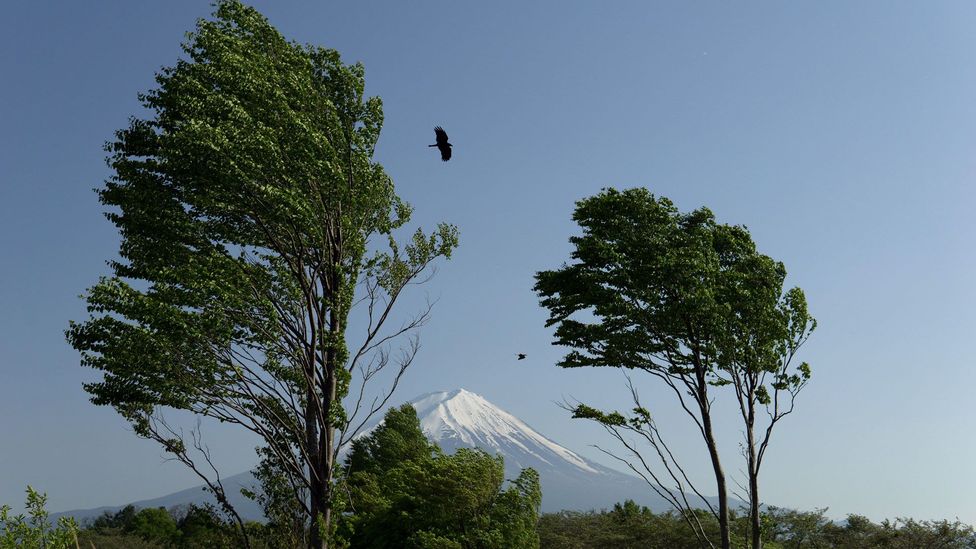
Combined, these experiences allow the viewer to see themselves as part of the natural world, no longer separated by societal constructs and instead at the mercy of natural timelines. Rather than seeing dents or uneven shapes as mistakes, they are viewed as a creation of nature – much as moss would grow on an uneven wall or a tree would curve in the wind.

“The aesthetics of wabi-sabi opened our eyes to everyday life and gave us a method of handling what is common in an uncommon, aesthetic way,” Prof Otabe said, highlighting the importance of acceptance in Japanese culture, a society forced to contend with devastating natural disasters on a semi-regular basis. Rather than casting nature solely as a dangerous and destructive force, it helps frame it as a source of beauty, to be appreciated on the smallest of levels. It becomes a provider of colours, designs and patterns, a source of inspiration, and a force to work alongside, rather than against.

Originating in Taoism before being passed onto Zen Buddhism, wabi-sabi encapsulates a more relaxed acceptance of transience, nature and melancholy (Credit: Lily Crossley-Baxter)

Originating in Taoism before being passed onto Zen Buddhism, wabi-sabi encapsulates a more relaxed acceptance of transience, nature and melancholy (Credit: Lily Crossley-Baxter)

It is the inevitable mortality embound in nature, however, that is key to a true understanding of wabi-sabi. As author Andrew Juniper notes in his book Wabi Sabi: The Japanese Art of Impermanence, “It… uses the uncompromising touch of mortality to focus the mind on the exquisite transient beauty to be found in all things impermanent”. Alone, natural patterns are merely pretty, but in understanding their context as transient items that highlight our own awareness of impermanence and death, they become profound.

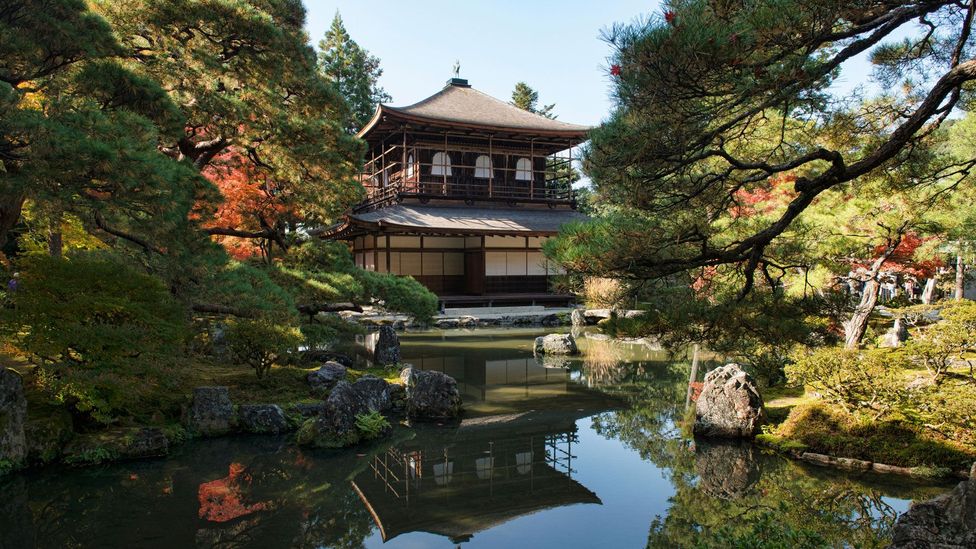
This idea brought to mind a story a Japanese colleague told me when we discussed wabi-sabi. Visiting Kyoto as a teenager, she had hurried through the grounds of Ginkakuji, a wooden Zen temple with quiet gardens, eager to see the more famous Kinkakuji, an ornate temple covered in gold leaf and perched above a reflective pond. Bright, stunning and glamorous, it lived up to her expectations, a far more impressive beauty than its traditional sister temple.

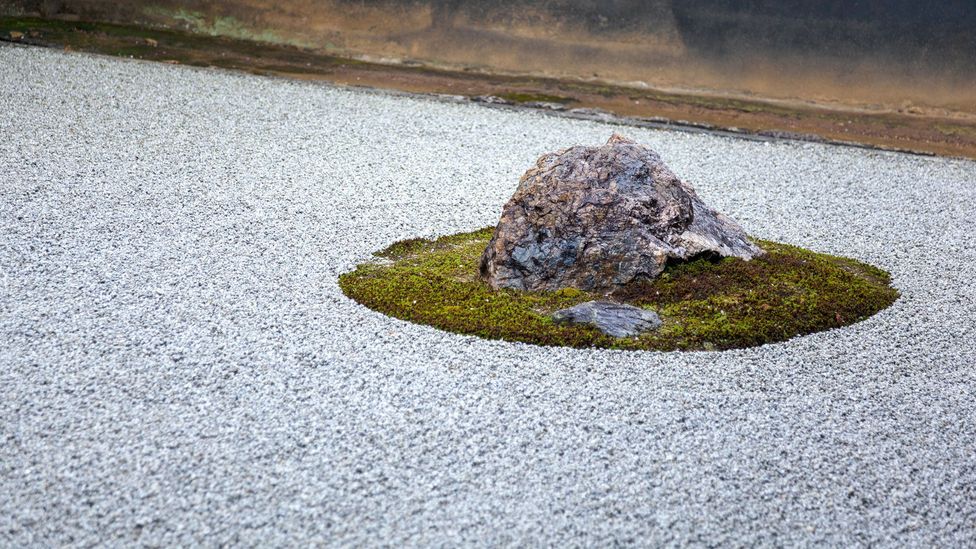
A few decades later, however, she returned to find the gold garish and, while it was certainly eye-catching, there was little beyond the immediate gratification of the gold leaf. Ginkakuji, however, offered a new fascination: the aged wood held countless hues and patterns, while the Zen moss and dry sand gardens offered a frame for nature’s many shapes. Unable to appreciate these things as a child, she had grown to see the ravages of time as a deeper source of beauty, far greater than a two-dimensional flash of gold.

Rather than seeing dents or uneven shapes as mistakes, in Japan they are viewed as a creation of nature (Credit: Christian Baumert/Alamy)

Rather than seeing dents or uneven shapes as mistakes, in Japan they are viewed as a creation of nature (Credit: Christian Baumert/Alamy)

Intrigued by the personal element of this appreciation, I contacted artist Kazunori Hamana, whose unique pieces are often considered to have an element of wabi-sabi. As we walked through the grounds of his tumbledown farmhouse in the rural idyll of Izumi in Chiba prefecture, he agreed with the need for age.

“You have different feelings when you’re young – everything new is good, but you start to see history develop like a story. After you’ve grown up, you see so many stories, from your family to nature: everything growing and dying and you understand the concept more than you did as a child.”

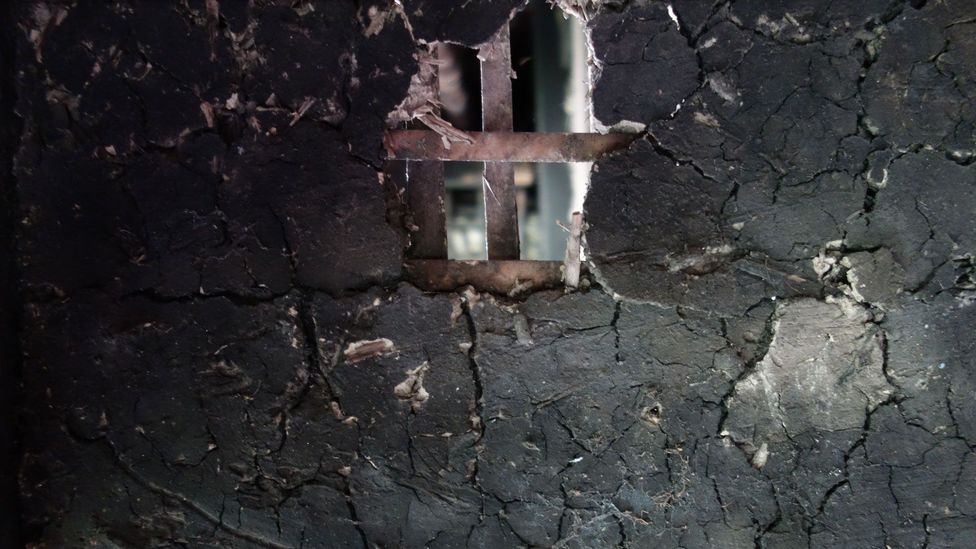
This appreciation for the marks of time is a key feature in Hamana’s works, which he chooses to display in derelict Japanese farmhouses. Explaining that the wooden doorframes have been blackened by years of smoke from the irori (an indoor hearth) and pointing out how the mud walls have started crumbling, he says he feels the history of the houses lend a fitting backdrop to his pieces, avoiding the cold duality of impersonal white gallery spaces.

Though not as ornate as its sister temple, Kinkakuji, the Ginkakuji temple in Kyoto exhibits a deeper source of beauty (Credit: dave stamboulis/Alamy)

Though not as ornate as its sister temple, Kinkakuji, the Ginkakuji temple in Kyoto exhibits a deeper source of beauty (Credit: dave stamboulis/Alamy)

Creating sculptures with natural clay from Shiga, an area with a reputation for high-quality clay and a long history of pottery making, Hamana embraces the important wabi-sabi concept of mutual creation between man and nature.

“I design a little at first, but clay is a natural thing, so it changes. I don’t want to fight with nature so I follow the shape, I accept it,” he said.

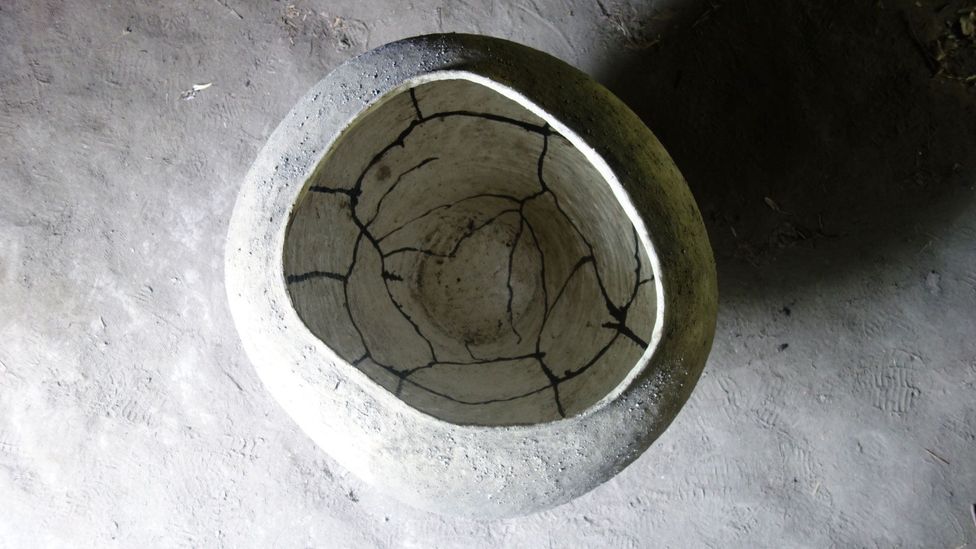
Not only does he allow nature to aid in the shaping of his pieces, but in their later appearance too. In an overgrown bamboo forest in the farmhouse grounds, he showed me the pieces he’d chosen to leave outside, buried in the undergrowth for years at a time. There they’ve developed unique patterns from extreme temperatures and surrounding plant life, as well as being occasionally broken. Studying them closely, I found that this simply added to the beauty of each piece, with the cracks offering another opportunity to add to the story.

Kazunori Hamana’s clay artwork is often considered to have an element of wabi-sabi (Credit: Lily Crossley-Baxter)

Kazunori Hamana’s clay artwork is often considered to have an element of wabi-sabi (Credit: Lily Crossley-Baxter)

Often associated with wabi-sabi is the art of kintsugi – a method of repairing broken pottery using gold or lacquer. The process highlights, rather than conceals, the cracks, allowing them to become a part of the piece, too. When his daughter accidentally broke some of his work, Hamana said, laughing, he decided to leave the pieces outside for a few years, allowing them to be coloured and shaped by nature. When it was repaired by a local kintsugi specialist, the different colours created a contrast so subtle, so uneven, that could never have been intentionally created. Embracing the effects of nature and allowing family history to be visible in a piece creates a unique value for something which would, in many cultures, simply be discarded as worthless.

Prioritising flawlessness and infallibility, the ideal of perfection creates not only unachievable standards, but misguided ones

In fact, the term ‘perfect’, which stems from the Latin perfectus, meaning complete, has been placed on an undeserved pedestal in many cultures, especially the West. Prioritising flawlessness and infallibility, the ideal of perfection creates not only unachievable standards, but misguided ones. In Taoism, since no further growth or development can take place, perfection is considered equivalent to death. While we strive to create perfect things and then struggle to preserve them, we deny their very purpose and subsequently lose the joys of change and growth.

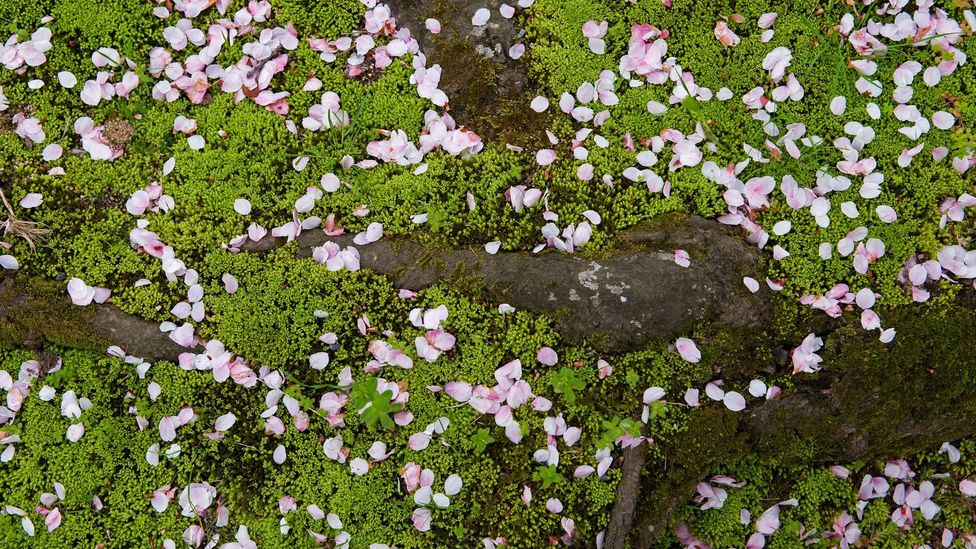
Although seemingly abstract, this appreciation of transient beauty can be found at the heart of some of Japan’s most simple pleasures. Hanami, the annual celebration of cherry blossoms, involves parties and picnics, boat rides and festivals, all beneath the often already-falling petals, considered as beautiful in their haphazard patterns on the floor as they are on the branches. The pure acceptance of a fleeting beauty that would garner no more than a few photos in the West is something of an inspiration. While the appreciation may be tinged with melancholy, its only lesson is to enjoy the moments as they come, without expectations.

The appreciation of transient beauty is at the heart of some of Japan’s most simple pleasures, such as the annual celebration of cherry blossoms (Credit: Alex Ramsay/Alamy)

The appreciation of transient beauty is at the heart of some of Japan’s most simple pleasures, such as the annual celebration of cherry blossoms (Credit: Alex Ramsay/Alamy)

The dents and scratches we bear are all reminders of experience, and to erase them would be to ignore the complexities of life. By retaining the imperfect, repairing the broken and learning to find beauty in flaws – rather than in spite of them – Japan’s ability to cope with the natural disasters it so often faces is strengthened. When my bowl from Hagi arrived in the post months later, its uneven edges were no longer a defect, but instead a welcome reminder that life is not perfect, and nor should I try to make it so.